


In an industry driven by speed, trends and overproduction, Sublime explores how Italian designer Carlo Caltabiano creates luxury bags with a distinctive approach that champions slow fashion as the new way of making.
“Looking back is no longer an act of nostalgia, it is an act of resistance.” says Carlo Caltabiano, founder of MONADE. At a moment when fashion is being forced to confront its own excesses, the past offers not refuge, but instruction. There was a time when objects were made to last, when design was measured not in seasons, but in years, and sometimes in generations.
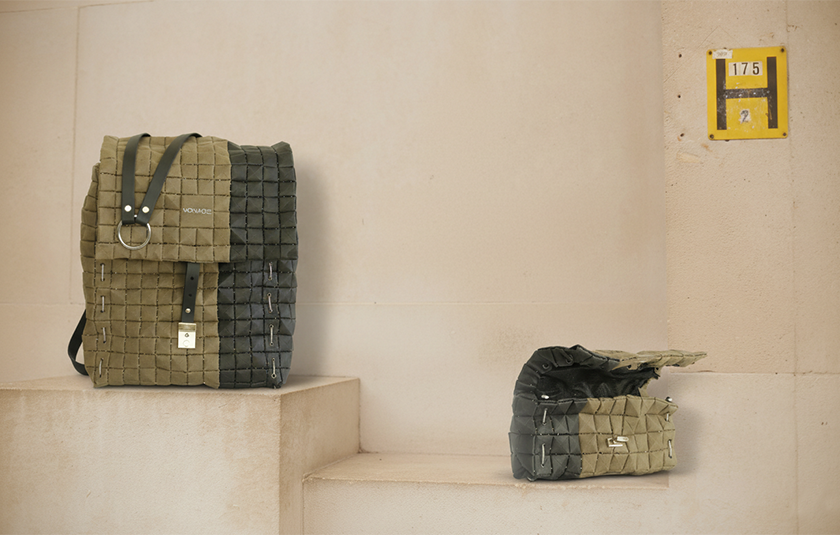
Slow fashion, in its original sense, was never meant to be a style, nor a marketing label. It was conceived as a quiet counter-current to acceleration and waste: a different way of imagining how things are designed, produced and used. A system that values durability over novelty, care over convenience and intention over impulse.
In this space, timelessness is not an aesthetic choice, it is a responsibility.
To understand what slow fashion can actually mean today, it is useful to look toward brands that build their identity not on seasonal cycles, but on methods, materials and long-term thinking. One such example is MONADE, an independent East London accessories brand founded by architect and designer Carlo Caltabiano, whose work sits at the intersection of architecture, fashion and material innovation.
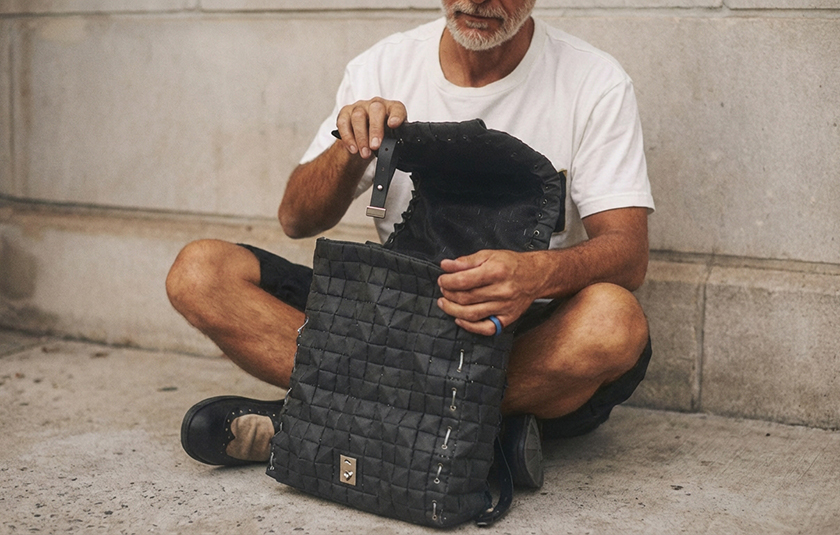
“I envisioned MONADE not simply as a product, but as a philosophy. Each piece reflects a deep respect for craftsmanship, a reverence for sustainability, and an embrace of modular creativity, building a future where design is mindful, and beauty is conscious.”
Learning from architecture.
Rather than beginning with silhouettes or trends, MONADE begins with a system. At the core of the brand is a patented folding technique that transforms flat, plant-based materials into three-dimensional, tactile surfaces. The result is a collection of modular handbags that feel as much like small pieces of architecture as they do fashion accessories—objects defined by structure, texture, and construction rather than decoration.
This approach is not accidental. Caltabiano’s background in architecture informs the way MONADE thinks about design: as a process of organising space, material, and function into coherent, durable forms.
“In architecture, longevity is a given; buildings are not meant to be replaced every season.” That same logic carries into MONADE’s products, where the emphasis is placed on durability, repairability, and adaptability rather than rapid turnover.
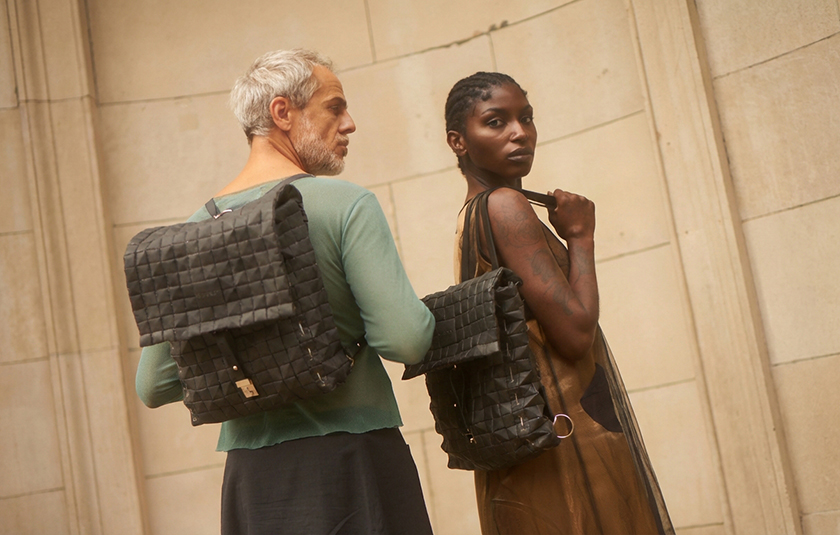
At the heart of MONADE’s design language is the idea of modularity. Each bag is composed of folded units that interlock to form a flexible yet structured surface. This modular construction allows the material to behave in unexpected ways: it can bend, expand and adapt, while still maintaining a strong geometric identity. Visually, the bags are defined by their sculptural, three-dimensional texture; conceptually, they are defined by a method that can evolve over time.
This is where MONADE’s interpretation of slow fashion becomes particularly tangible. Instead of designing products that are tied to a specific season or trend, the brand has developed a technique that can generate multiple forms and applications. The same folded system can be used to create different bag typologies—from compact belt bags to larger backpacks—without changing the fundamental logic of construction.
Materials play an equally important role in this philosophy. MONADE’s bags are crafted from Texon Vogue, a pioneering vegan material made in Italy from sustainably sourced wood pulp. Certified by the Forest Stewardship Council (FSC), and The Vegan Society, it was developed as an eco-friendly alternative to leather, combining strength, flexibility, and a refined texture with a low environmental footprint. Water-resistant and designed to evolve over time, the material softens with use and develops a patina that reflects the life of the object and its owner. Rather than pursuing a pristine, unchanging surface, MONADE embraces ageing as part of the product’s narrative.
All MONADE models are originally crafted by the founder, individually and by hand, ensuring that each design carries the mark of its maker. Selected pieces are then produced in small batches in collaboration with social enterprises. This approach allows for careful quality control, fair working conditions, and a more responsive relationship between design and making. It also ensures that production volumes are guided by real demand, making the process more sustainable while empowering women from vulnerable backgrounds.
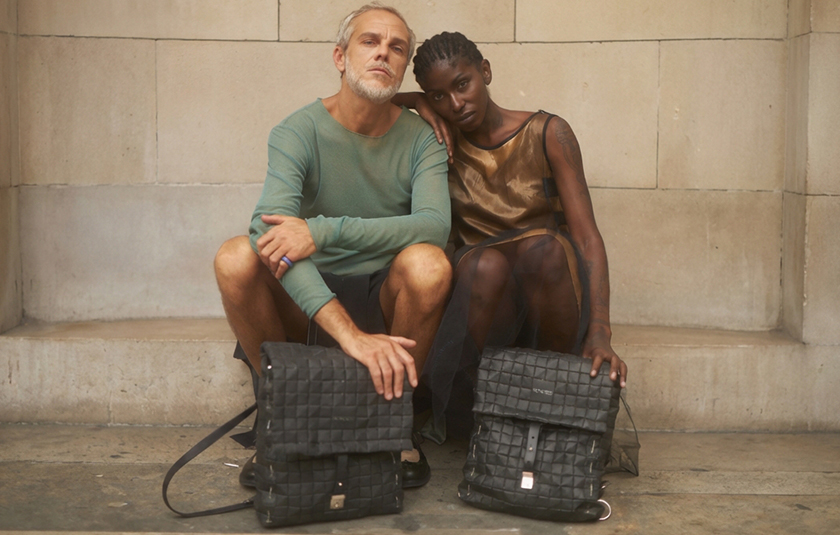
“Slow fashion, in this context, It is about aligning time with intention. It is about recognising that good design often requires iteration, patience, and a willingness to resist the pressure of constant novelty. It is also about building value through consistency—through a recognisable language of form and a clear commitment to materials and methods.”
The brand’s name itself hints at this philosophy. “Monad” refers to an indivisible unit, a fundamental building block from which complexity can emerge. MONADE’s folded modules operate in much the same way: simple elements that, when combined, create rich, adaptable structures. This conceptual underpinning reinforces the idea that sustainable design is not only about reducing impact, but about creating systems that can grow and evolve without losing coherence.
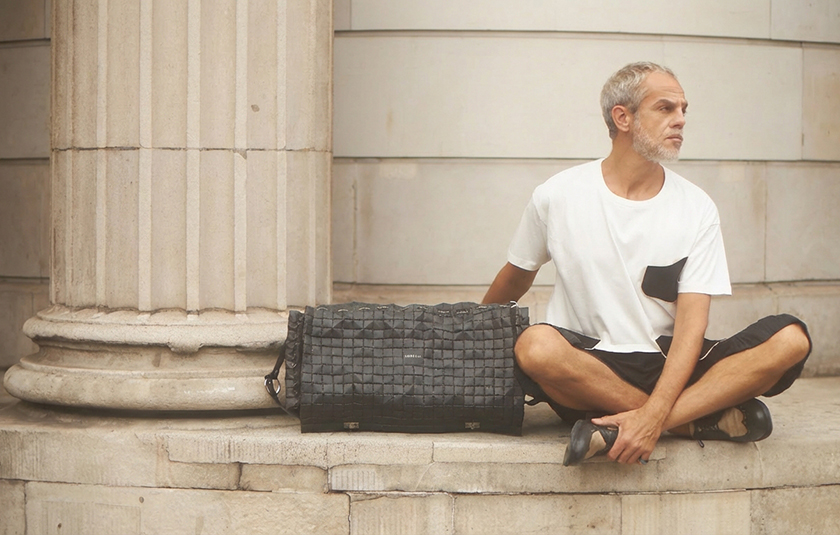
In the broader landscape of contemporary fashion, this approach feels both radical and quietly pragmatic. While many brands are searching for the next innovation in materials or the next viral silhouette, MONADE is investing in a technique—a method that can outlast trends and accommodate change. It is a reminder that some of the most meaningful forms of sustainability are not immediately visible, but embedded in the way objects are conceived, produced, and used.
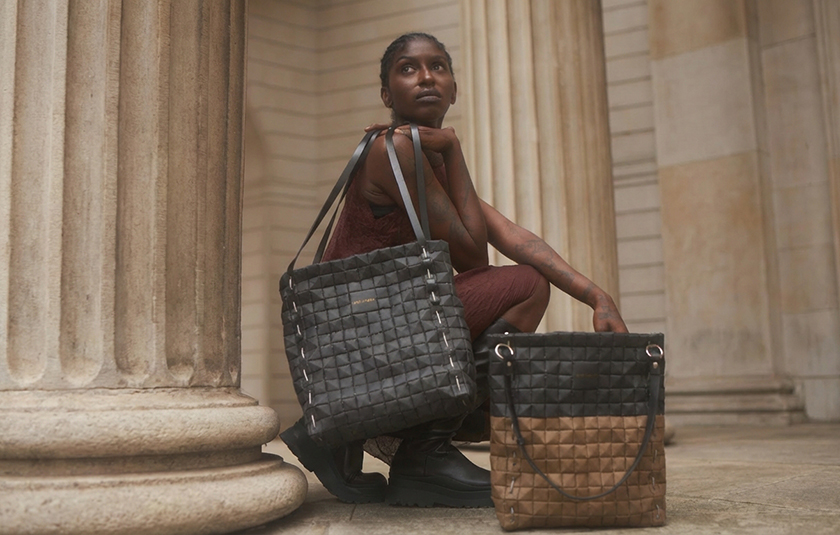
In an industry often driven by acceleration, this kind of thinking requires a certain courage—to move at a different pace, to grow deliberately and to trust that there is value in doing less, but better. It also requires a belief that consumers are not only looking for newness, but for meaning, durability, and connection.
As conversations around sustainability continue to evolve, brands like MONADE suggest that the future of fashion may lie less in chasing the next big thing and more in refining the fundamentals: how things are made, why they are made, and how long they are meant to last. In that sense, slow fashion is not about going backwards. It is about designing forward—with care, with intention and with time on its side.
MONADE has received the Sublime Good Brand Award 2026 in the Fashion & Style category, honouring its dedication to sustainability and conscious production.