

The worldview that has long prevailed is changing. Prof. Stuart Walker introduces his latest book, Design Shift: Creative Values for People, Planet and the Common Good.
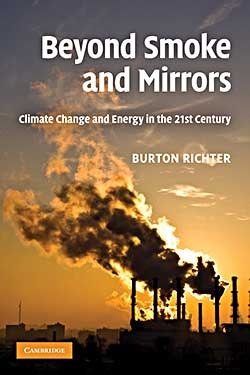
Major preoccupations in contemporary society include scientific discovery, technological innovation, widespread access to mass-produced goods, individual ownership of property, and the continual promotion and encouragement of consumption through advertising. Many of these have had positive effects – improved material standards of living, better healthcare, and new opportunities for millions of people. However, they have been accompanied by a wide variety of very significant costs whose cumulative impacts are becoming increasingly difficult to bear.
A worldview that is in greater harmony with people and planet will be one that values community, other peoples, other species, and the earth itself, as well as moderation and sufficiency in material aspirations. A more balanced philosophical outlook would recognize the importance of imagination, empathy, subjectivity and intuition, along with reason, logic, utility and objectivity, so that the hard edges of cold facts are softened by the quiet inner voice of human values. Achieving such a balance is essential for substantive change, for without intuition we cannot love.
Despite many setbacks, exacerbated by some right-leaning politicians and press attempts to weaponize environmental issues for political gain by referring to those striving to protect the planet as zealots and eco-maniacs, there are growing signs of positive change. The wheels may turn slowly, but they are turning; momentum is building. In Montana, a legal precedent was set when sixteen young environmental activists successfully argued that their constitutional right to a clean and healthy environment had been violated by the state’s facilitation of the fossil fuel industry and their lives had been adversely affected by the currents effects of climate change as well as its daunting prospects for the future. Ecocide – the large-scale destruction of the natural environment by human activities – is already a crime in France, Ukraine, Russia and Vietnam. Mexico, Brazil, Argentina, Chile, Belgium, The Netherlands, and Scotland are moving in the same direction. Another example of positive change comes from Canada where the government in Ottawa is partnering with the Inuit people of Nunatsiavut to create a marine conservation area in the Labrador Sea covering an area of some 15,000 square kilometres. It will be governed in a way that allows for the continuation of Indigenous peoples’ traditional hunting and fishing practices, while prohibiting large-scale fishing and industrial development.
Many are considering alternative ways of knowing, acting and being in the world. One recent phenomenon that clearly demonstrates our need for a different route forward is the emergence of what might be described as ‘grief for the demise of nature.’ This refers to strong feelings of sadness combined with a sense of anxiety about the future. However, in contemporary society many of the customs, traditions and collective practices that once enabled people to deal with feelings of grief have been allowed to wither; for instance, a striking characteristic of the modern period in Europe has been the precipitous decline of religious adherence and shared, faith-based practices of all kinds. While this is an aberration in human history, the questions to which traditional religious and/or communal spiritual practices respond have not disappeared, for we are the same human beings with the same meaning-seeking needs.
Today, some people are striving to reinstate these types of practices while giving them new forms. One such example reveals the relationship between our fundamental needs, more traditional, intuitively conservational values, and the existential threat of planetary breakdown.
Funeral for Nature: The year 2000 was an occasion for global celebrations, fireworks and much hullabaloo; it was the dawn of a new millennium. At the same time, a quiet event that took place in Iceland went largely unnoticed. A small, unremarkable glacier disappeared. Its name was Ok, and it was the first of Iceland’s glaciers to be lost to human-induced climate change. Its disappearance wasn’t confirmed for another fourteen years, but even then the news hardly raised an eyebrow. Two years later, anthropologist Cyme Howe heard of its passing. Professor Howe focusses on anthropogenic climate change and how this knowledge challenges our assumptions and requires us to develop new ways of conceiving our collective futures. With colleagues and local experts, she set about creating an event that would mark the demise of the glacier while also being a way to process feelings of grief for its loss. Her work culminated in over a hundred people, including the prime minister of Iceland, Katrín Jakobsdóttir, and the former UN High Commissioner for Human Rights, Mary Robinson, gathering on the mountain where the glacier had once been. Here, a funeral ceremony was conducted to mark the ‘death’ of the Ok glacier. A copy of a death certificate submitted to the authorities was produced, which identified the causes of death as ‘excessive heat’ and ‘humans’. Words were said, a poem was read aloud, and a bronze memorial plaque installed bearing the following words,
A letter to the future
Ok is the first Icelandic glacier to lose its status as a glacier.
In the next 200 years all our glaciers are expected to follow the same path.
This monument is to acknowledge that we know
what is happening and what needs to be done.
Only you know if we did it.
Ágúst 2019
415 ppm CO2
Since then, a similar ceremony has occurred to mark the ‘death’ of the Pizol glacier in Switzerland, and a variety of other initiatives are recognizing and mourning the disappearance of natural features, ecosystems and species. With all such actions, there are feelings of grief, but also feelings of guilt about what we have done and are continuing to do. Since the memorial ceremony for the Ok glacier, CO2 levels have risen to over 420 ppm, and the next glacier in Iceland to vanish is likely to be Hofsjökull.
These kinds of projects, which attempt to deal with our emotional responses to climate change and the destruction of nature, can be understood as a form of meaning-seeking and meaning-making through symbolic acts and collective ritual. They are associated with spirituality, myth and religion, which until the modern era had always been vital aspects of making sense of our lives, our actions and our world. In essence, such responses are an acknowledgement of the age-old human need for immutable truths and a sense of permanence, and they complement rather than oppose more scientific, analytical and, inevitably, more transient ways of understanding the world.
The so-called Age of Reason that heralded the dominance of science, technology and industrialization also resulted in the disenchantment of the world and a transition to de-mythologized, secular societies. As a result, modern societies tend to lack intimate, embodied knowledge acquired through practice-based traditions that are developed over generations and passed down via repeated communal enactments and participation, including ritual and ceremony. Such acts transcend the individual and the everyday, and help reveal new or hitherto unrecognized possibilities, thereby laying the groundwork for seeing the world differently and imagining new directions forward. Through shared practices, we begin to recognize relationships and interdependencies, and to appreciate the importance of complexities and connections. Such understandings are felt intuitively long before their value becomes recognized by the rational mind. Ceremonies, rituals and symbols give expression to deeply held feelings and thoughts that are difficult to express in words; frequently, silence is a more apt response. These ways of thinking, knowing and being are also imaginative, creative and connected to our ideas of the sacred, a term that refers to things that are considered special and are set apart from ordinary affairs and routines. As such, the various arts as well as cultural studies and practices have an important role to play in confronting and enriching our ways of understanding and being in the world.
An entirely different event occurred two years after the funeral for the Ok glacier, but it elicited a similar kind of emotional response. At the age of ninety, Canadian actor William Shatner, made famous by his role in the television series Star Trek, journeyed into space aboard the Blue Origin space shuttle. Later, he wrote that it had been the complete opposite of what he had expected, “It was among the strongest feelings of grief I have ever encountered. The contrast between the vicious coldness of space and the warm nurturing of Earth below filled me with overwhelming sadness. Every day, we are confronted with the knowledge of further destruction of Earth at our hands: the extinction of animal species, of flora and fauna . . . My trip to space was supposed to be a celebration; instead, it felt like a funeral.” He tells us that such feelings are not uncommon among those who have travelled into space. It seems that when the Earth is seen from such a distance, people are often filled with a sense of its stunning, life-giving beauty and uniqueness together with a heightened awareness of its sheer fragility and vulnerability. Shatner then quoted author Frank White, “There are no borders or boundaries on our planet except those that we create in our minds or through human behaviors. All the ideas and concepts that divide us when we are on the surface begin to fade from orbit and the moon. The result is a shift in worldview, and in identity.”
A Worldview out of Step: A funeral for a glacier and an unexpected feeling of grief during a journey into space are but two indications that the worldview that has long prevailed among governments, businesses, universities and wider society is changing. Enormous wealth has been generated for some; many more enjoy high material standards of living; there have been major strides forward in scientific understanding and technological capabilities. But the cost to the earth has been far too great and this is causing a deep sense of sadness and anxiety among an increasing number of people. It is a worldview that still dominates, but it is out of step with the times in which we live, with the planet, and with humanity’s long-term interests.
New practices are emerging that are allowing us to collectively acknowledge and mourn the loss of nature, and these practices invoke both symbolism and ritual. Finding ways to articulate our feelings of grief are part of a growing change and, perhaps too, part of a growing up, a maturation of our collective consciousness. We may not all be able to go into space, but we can all be open to and contribute to the critically needed shift in worldview of which Frank White speaks.
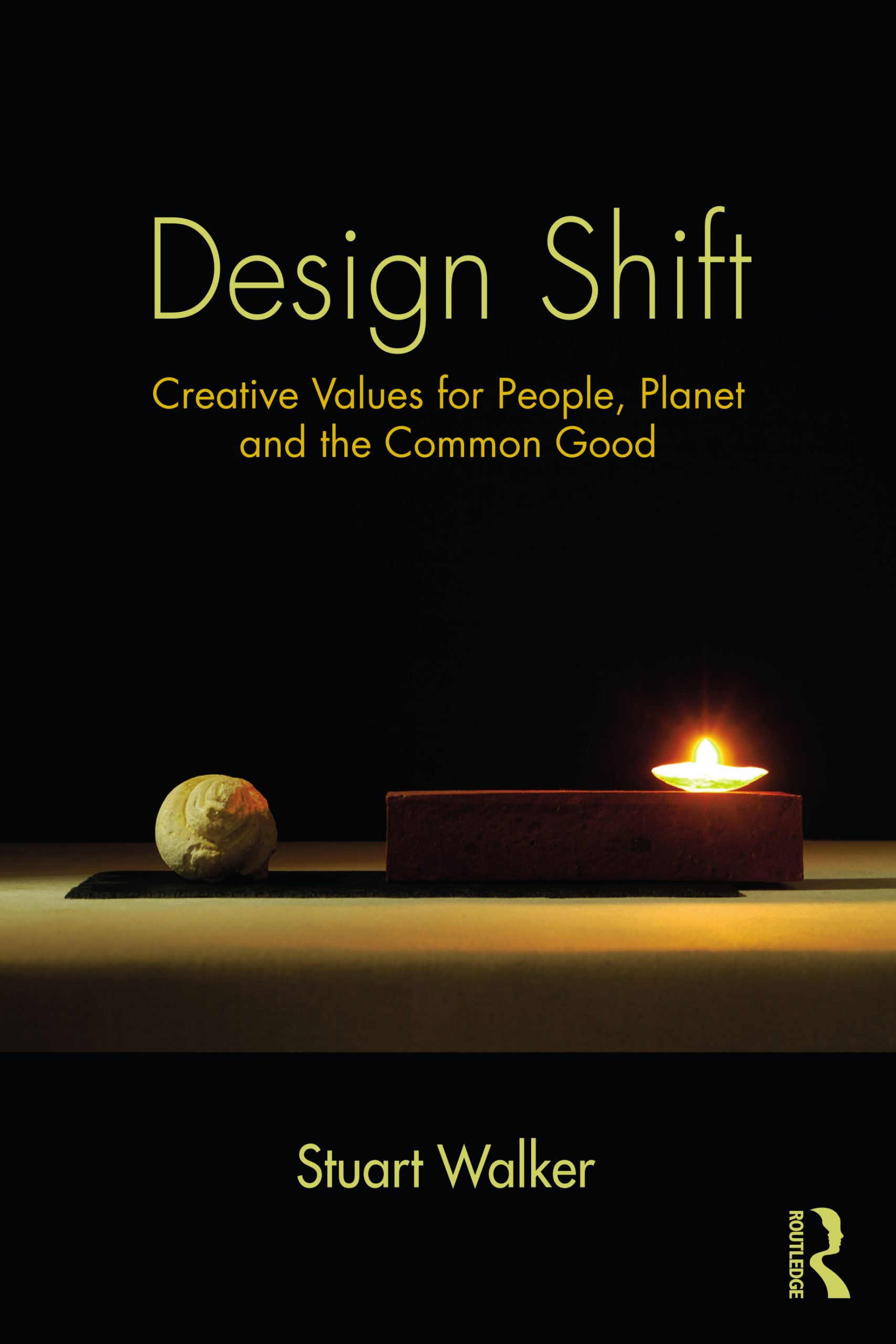 The above is an excerpt from ‘DESIGN SHIFT: Creative Values for People, Planet and the Common Good’, Routledge, 2026; more information Here
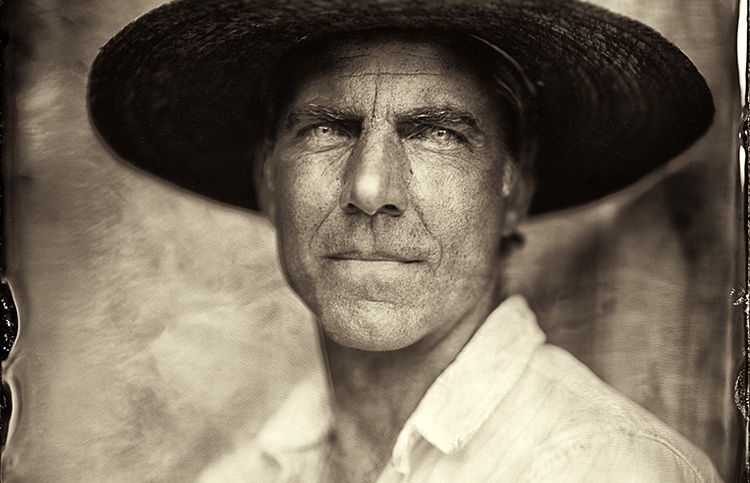
Stuart Walker is Chair of Design for Sustainability at Manchester Metropolitan University. His research in design for sustainability has been published and exhibited internationally, and his many books include Sustainable by Design and Design & Spirituality (Routledge), and Design for Resilience (The MIT Press).
Explore more of Stuart Walker’s articles and reviews here on Sublime Magazine.