

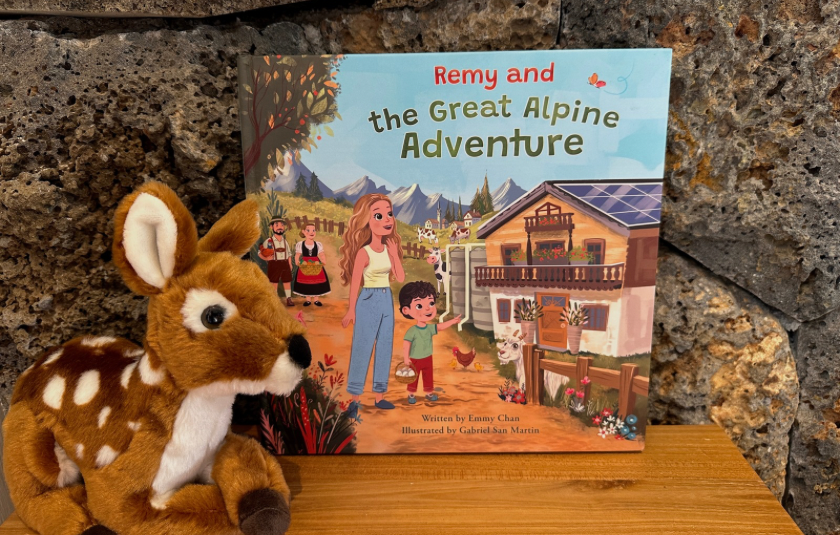
Raising the Next Generation of Responsible Travellers: An Insightful Sublime Magazine Interview with Children’s Author Emmy Chan on Her Formative Book “Remy and the Great Alpine Adventure”
SUBLIME: Many parents worry about causing ‘eco-anxiety’ in young children. How can we educate children about responsible travel without scaring them?
EMMY CHAN: When it comes to responsible travel, I believe the best way to educate children is by moving away from the often negative reasons of ‘why’ we shouldn’t do something, and instead empowering them with practical, simple actions they can take, highlighting the positive impact they can have. Responsible travel usually provides a deeper, more meaningful and memorable experience for everyone, so it’s actually such a valuable topic to talk about. It can truly enrich a child, broaden their worldview, shape their future passions and goals and mold them into well-rounded global citizens.
S: Your book, Remy and the Great Alpine Adventure just won the Gold Medal for Environmental Issues at the 2026 Moonbeam Children’s Book Awards. What inspired you to write a children’s travel story specifically about sustainable tourism?
EC: Over five years of university studies, both in the UK and USA, I deliberately tailored my academic path, including my Master’s degree in Travel Industry Management, to reflect my deep passion for sustainable tourism. Beyond the classroom, I have travelled to many places worldwide and witnessed firsthand how tourism can either be a profound force for good, or cause detrimental harm and destruction. When my son, Remy, was born, I realised that if we want to change the future of travel, we need to start with the next generation. I wanted to create a lighthearted and uplifting story that simplifies these complex concepts and show children that exploring the world is a beautiful privilege that comes with a responsibility to protect it.
S: Why did you choose to set your first book in Tirol, Austria?
EC: Firstly, Austria holds a very special place in my heart. But beyond that connection, mountain destinations are particularly vulnerable to the impacts of poorly managed tourism. Because of their isolated geographic nature, alpine regions often have lower carrying capacities and fragile infrastructure that cannot easily scale to meet sudden tourist demands, without facing negative consequences. I chose Tirol, Austria because it serves as a beautiful, real-world model of communities that care. Austrians are known for their deep commitment to environmental protection and
cultural preservation, so by showing Remy travelling to the region, I wanted to teach children how to enjoy these incredible destinations responsibly by following the example of the people who call them home.
S: How can sustainable tourism concepts in Remy’s story be implemented at home for families that are not able to go on grand adventures abroad?
EC: Sustainable tourism isn’t only about travelling abroad, it is about adopting a lifestyle and mindset for how we treat the world and the communities around us. The concepts Remy learns in the book blend seamlessly to everyday life at home. Families can practise these habits daily, for example, choosing more sustainable forms of travel, eating local, fresh, in-season food sourced from local farms and suppliers and practising responsible disposal of waste. It’s also about supporting our local independent businesses and actively celebrating our own cultural heritage by learning about local traditions, and attending cultural festivals and events to keep traditions alive for future generations. By building these foundational habits at home, children become empowered and it helps them to realise that their everyday choices hold immense power.
S: Children love active engagement. What are two or three simple things kids can physically do on a family holiday to practice responsible travel?
EC: In my opinion, some of the most important travel decisions come before a family even sets off on their trip. Children could spend some time making themed bucket lists for the trip, for example creating a list of all the traditional dishes they’d love to try at the destination. Eating local dishes supports local farmers, fishermen and the economy as it reduces the need to import ingredients. It also supports cultural preservation, helping to keep cultural traditions alive for future generations. Children can make lists for all kinds of trip themes such as local restaurants to visit, cultural events and festivals to attend and nature-based activities to experience, always ensuring that the family chooses locally-owned and managed tour companies. Another way children and families can give back to the destination is by getting involved with community initiatives like mountain clean-up events or tree planting. These aid cultural exchange and are a great way to integrate with the local community, which also improves relationships between the locals and tourists. Children could also choose to learn a new skill from a local, through taking a workshop or private lesson. This helps to preserve traditional crafts and ensures funds go directly into the pockets of the local people.
S: As an author, what role do you think stories about responsible travel play in shaping how the next generation respects the environment and local cultures?
EC: Stories about responsible travel gives children the gift of global awareness, helping them to understand the environmental and socio-cultural nuances of a destination. By experiencing different cultures, beliefs and traditions through stories,
children learn empathy and non-judgement. Stories also enable children to discover unique and wonderful nature and wildlife, similar to how they would in real-life, sparking a desire to value, protect and preserve the environment for future generations.
S: The art in the book really brings the story to life. How did you work with your illustrator Gabriel San Martin, to bring this world to life?
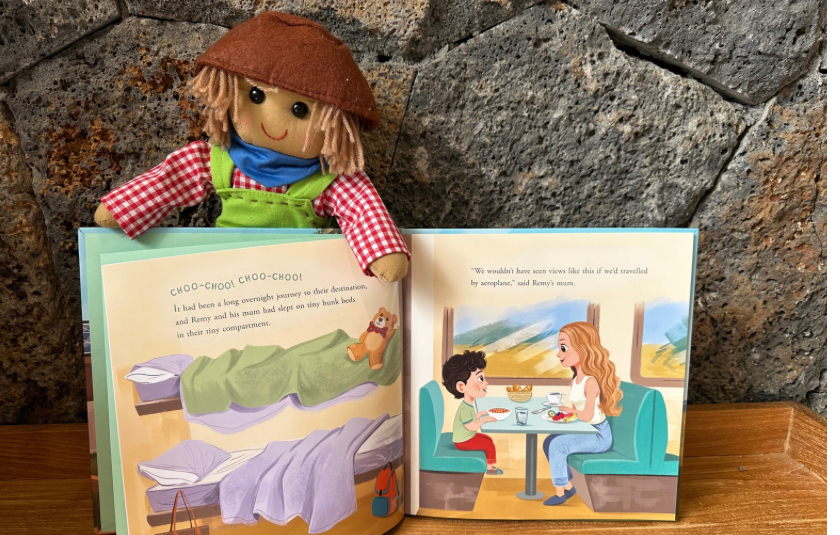
EC: Because the message of sustainability can sometimes feel serious and heavy, I wanted the artwork to feel vibrant, joyful and full of life. I spent a lot of time searching for the perfect illustrator for this story, especially because the book holds such sentimental value to me, being inspired by my son, Remy. We collaborated closely to make sure the landscapes felt magical and inviting, that the main characters, Remy and Remy’s Mum were recognisable and that playful details were embedded into Remy’s interactions with nature and the local communities. Finally, when searching for an illustrator, it was crucial to find someone whose style could grow with the entire book series.
S: Where can local families find your award-winning book, and what is the main message you hope they take away from it?
EC: The ultimate message I hope children will take away from reading ‘Remy and the Great Alpine Adventure’ is that their small everyday decisions can hold immense power, often rippling through extended families, friends and wider communities. I’d also like them to feel positive and hopeful for the future, because there really is so much good going on out there. Remy and the Great Alpine Adventure is available via the official website of Little Mangrove Press Retailers and stockists can order the book via Gardners Books.
About Little Mangrove Press:
Little Mangrove Press is an emerging independent children’s publisher that weaves informative fiction storytelling with themes of environmental protection, cultural exploration and responsible travel. littlemangrovepress.co.uk
Little Mangrove Press has received the Sublime Good Brand Award 2026 in recognition of its commitment to advancing social and environmental sustainability through creative storytelling, responsible travel and environmental awareness.